Build an app in 10 minutes with Cortex Code and Domo — LIVE demo at Snowflake Summit
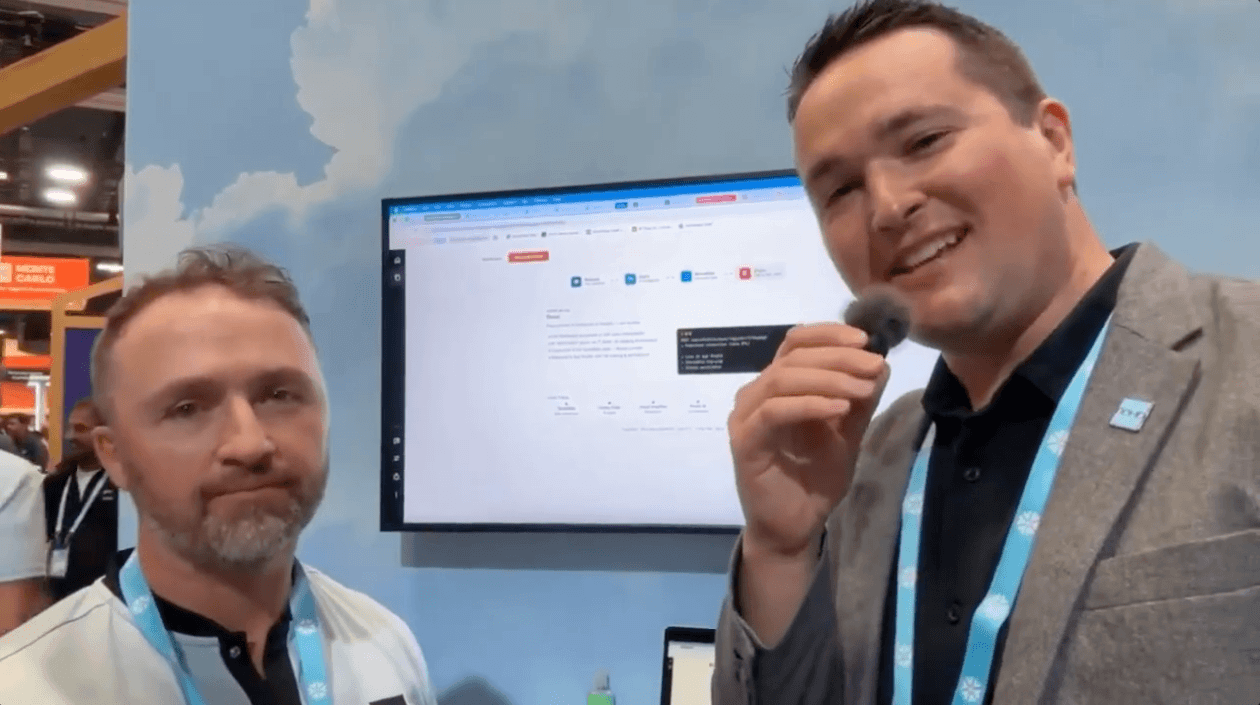

Jason: I'm Jason from Domo. I'm here with Chris at the Domo booth. We're talking about what everyone here at the conference is wanting to see when they come over to the booth. What's the most exciting thing? Show us more.
Chris: Yeah. Well, in general, everybody's really excited about Cortex Code. We're getting a lot of interest in how Domo is leveraging Cortex Code to make Domo more efficient as well. So we built a bunch of skills that Cortex Code can use to be able to understand how to build dashboards, to manage users, to do all sorts of governance inside of Domo, and make that really efficient so that we can deliver data products to the line of business as fast and efficient as possible. So we'll just show you a quick example of what we're doing here today.
Jason: Awesome.
Chris: So in this example, I'm just going to tell Cortex Code to do a retail analysis of some of the data that we already have inside of Domo. And so what I want it to do is analyze the data, run Cortex on top of that to give me some AI insights, and then it's going to go and actually build a dashboard inside of Domo and publish that out to a bunch of different users so that they can get access to it all at once. So it's kind of the power of all of these tools coming together at once.
Basically, what we're doing here is we've given Cortex Code this prompt, and now it's just going to run through a series of steps. And it's unbelievable how fast this executes. I mean, we're talking like sub five minutes from data generation to running Cortex Insights on top of that and then actually publishing this app out into Domo. So, here you're actually seeing it go through step-by-step generating data, hooking up the datasets inside of Snowflake. It's then going to make those available inside of Domo.
Jason: What would the customer that's doing this, what are they really trying to do? Where are they at today? Where are they trying to get to?
Chris: Yeah, there's a couple of things. One, oftentimes they just don't have enough manpower to meet all the demands that are coming to them. So they're saying, "Hey, we got to figure out a way to be more efficient." So this is a huge one here, able to do so much more with a lot less resources. The other one is, "Hey, we're trying to enable kind of like a self-serve with the line of business," and we're trying to figure out some tooling that works for them there.
Jason: That makes sense. So what step is it doing right now? Tell me what's happening behind the scenes. What would the normal non-AI workflow look like for this?
Chris: A normal non-AI workflow: I would have to go in, find the datasets that were actually applicable to this use case. I'd have to then analyze those, figure out what's in them, make sure that they're the right ones. Then I would have to run some sort of analysis probably outside of Snowflake to get the AI insights that we wanted to do there. And then ultimately, I would go into Domo, hook up that dataset, build out a dashboard, figure out which KPIs were meaningful, set that up, and this is probably not just a "me" thing. This might be a full team of people that I have to get involved in this process, and then we have to go figure out the governance around that. So what privileges should they have? What permissions? What can they do? And then we assign all that out, and it is hours if not days of work to do that.
Jason: Okay. So going from hours, days, weeks perhaps to just a couple of minutes with AI. So where are we at now in this process?
Chris: So we just completed step three of six. So step one was getting the table. Step one and a half is generating insights. Step two is making that data available in Domo. So it was in Snowflake initially. We've now registered this automatically as a federated connection inside of Domo.
Step three is actually building the layout. So we've given it a lot of styling guidelines. So we want to make sure that whatever it produces is consistent with our branding. So that's what it's doing here is it's kind of running through those skills figuring out how we want to display this and that's what it's working on right now and pretty soon we're going to have a design that we actually publish to Domo.
Jason: Okay. So before, again, a small team of people, all these different pieces—the data engineering, the analysts, the visual builders—we're doing that all with AI while we're having a conversation about how it's working. It's amazing.
Chris: Yeah, it's amazing. I mean, we've always been really good at time to value, but this is just putting it on steroids, for sure.
Jason: Okay. So, tell me about some of the things like what do we expect this to look like? What are some of the style choices or the things as you went and put this together?
Chris: Yeah, we've got like ten different style choices in there that are basically just consistent with branding that we want to have for anything that we're showcasing at Snowflake Summit. However, you could do anything you wanted to to be consistent with your own styling. So, it's going to pick between one of those themes. It's got a handful of themes to pick through.
We've provided it basic instructions on—Domo has something like two hundred chart types. It has access to all of those. So, it's a little bit of a guess as far as what it actually puts out there. I could give it a lot more specific prompt. In fact, earlier today, I had a gentleman come by who wanted me to do a demo where we basically picked out his three-day itinerary for a road trip on the East Coast, and he wanted it full with a map. And so it generated it that way, right? It like picked out the top tourist destinations and then it even generated his exact route to take.
So it's kind of dependent on what you put into the prompt. In this case, it's going to be a little bit of a "pick what you want to display" type of stuff, analyzing the data. So it looks like we've got the data is in here, we've got it—it created the data, it went and put that data into Snowflake, it registered that as a table in Domo so we could query it directly. Then it went and built the app using all of those styling choices. Now it's publishing it. That's step four.
Jason: Yep. Okay.
Chris: And then finally, it's deploying it to App Studio, which is where we can then go and share it.
Jason: Yep.
Chris: And then the last thing will be a little bit of governance. The only thing that you missed there is that we had Cortex generate some AI insights on the data once it was loaded into Snowflake.
Jason: Okay. So, it's looked at all that data and is then adding additional columns and additional metadata based on its analysis.
Chris: Yeah, it's doing that analysis. So now you're seeing the full results of that. So complete, we can see everything that it's done. I now have my dashboard. It provided me the link inside of Domo that's going to be live. Time about three minutes, zero errors. Data stays inside of Snowflake.
And this is exactly what you just asked a second ago. It has six KPIs, four visualizations complete with Cortex insights. And then we even have a tab here that shows how it was built. So what is Domo doing? What is Snowflake doing? Cortex, Coco, etc. We kind of break down all those pieces.
Jason: Okay, so we're at six minutes on the clock and it's already generated the app. It's now just updating the queries and the permissions. Okay.
Chris: Yeah, that's the last thing it's doing is who are we going to grant—so, it's sharing it with us, sharing it with the right people.
Jason: Okay. And then momentarily, we'll have it and we'll show you what it looks like inside of Domo. Amazing. And because we're in Cortex Code, we actually see it's telling us what files it changed, what adjustments it made inside of the platforms.
Chris: Yep. Yep. So there's a log of everything that's going on there. Very cool.
Jason: Okay. What are—when you're showing this to people, what's the reaction that you're getting?
Chris: Oh, I mean, everyone's blown away. That's the theme. It's like it's unbelievable how much more efficient we can be. And everybody's starting to think about bigger problems than they were already thinking about solving. I mean, it seems like you're going from, "We just need to get the lights turned on, get all the data together," to, "Hey, how can we actually drive an outcome? How can we get people doing more work and delivering more value to the organization?"
Jason: Yeah, definitely. How do I start—sometimes we call it the breadline, right? Everyone's waiting to get their application. Like, how do I just clean that up, get everybody out there, get them what they need, have them start building? It's amazing.
Chris: Yep. So, let's jump over and see. We might be able to have access to it right now.
Jason: The moment of truth. What did the AI create for us?
Chris: I love it. Here we go. This is that retail performance dashboard we asked for, consistent with the branding theme that we gave it. Here we can see the Cortex insights that were generated: improve online share to thirty percent, optimize inventory management, enhance customer experience, etc.
Here are our key KPIs, and then how it was built, the request we sent, Coco interpreting what we were asking, identifying and building the datasets, generating those insights, what Snowflake's doing—all your role-based access control stays intact, existing governance policies apply, all of your compute stays in Snowflake, and then Domo, we're making that live dashboard accessible to five hundred users immediately. No time for submitting a Jira ticket and all of the typical amount of resources that go into deploying that. We're connected live to Snowflake, so this is always up-to-date and active. And now we're deployed to App Studio with full sharing permissions. Everybody that I wanted to access it has access now.
Jason: That's amazing, Chris. In less than ten minutes, we've got an app. We've solved a problem. We shared it with five hundred people. And I heard a customer today tell me that Domo plus Snowflake is "stackless."
Chris: Right. Exactly. It's all of the things I need to solve a problem—to go from data, apply AI to it, distribute it to people without jumping through ten different products and trying to solve a bunch of problems.
Jason: Yep. Spot on. We're hearing that a lot. Amazing. Well, thank you, Chris. If you're here at Snowflake Summit, come drop by the booth, say hi. We'll give you a demo, show you something else that we're doing that's cool, and give us your advice. Any last words, Chris?
Chris: No.

Jason Longhurst is an accomplished leader in marketing, design, and user experience with over a decade at Domo. As Head of Product Marketing, he drives the mission of making data and insights accessible to all. Previously, as Director of User Experience, he led teams to create intuitive tools for data tasks like transformation and storytelling. Earlier roles, including Creative Director of Product Story and UX Design Manager, showcased his ability to merge enterprise-grade functionality with user-friendly design.
A graduate of Brigham Young University with a degree in Communications and a minor in Advertising Design, Jason combines strategic thinking with creative expertise. He’s passionate about storytelling and user-centric solutions that empower teams to deliver on business goals.

Chris Hunter is a seasoned Solutions Engineering leader at Domo, with over 11 years of experience helping clients leverage data and AI platforms to drive business transformation. Currently managing the solutions consulting team, Chris combines deep technical expertise with a passion for understanding business requirements and data management strategies. Prior to Domo, he worked in sales engineering roles, delivering technical consultations and training to enterprise customers. A Brigham Young University graduate in Information Technology, Chris is known for his leadership, customer focus, and ability to bridge the gap between complex technology and actionable business outcomes.
Domo is THE FASTEST way to get data into Snowflake and start building and deploying solutions. Tune is as our head of product marketing and one of our solutions engineers dig into the power of Snowflake and Domo.

Domo transforms the way these companies manage business.