Rejoignez l'AI + Data Tour pour bénéficier de formations pratiques, découvrir des témoignages clients concrets et échanger avec les experts produits Domo près de chez vous.
Inscrivez-vous maintenant

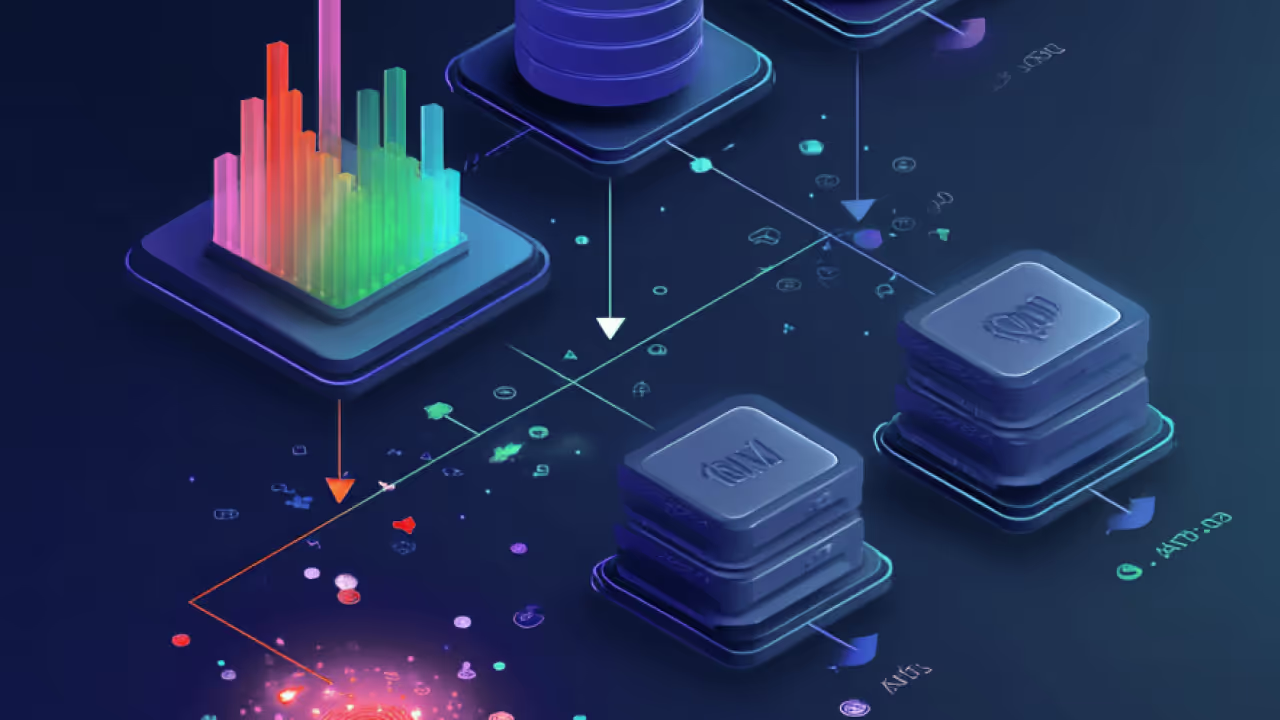
The global datasphere hit 147 zettabytes in 2024. It's projected to double by 2027. For data teams, that growth translates directly into more sources to connect, more pipelines to maintain, and more pressure to deliver clean data on shorter timelines. Two terms dominate these conversations: data integration (the broad discipline of unifying data from multiple sources) and extract, transform, load (ETL), a specific batch-processing method within that discipline. This article explains the key differences between them, when each approach works best, and how many organizations combine both strategies to balance analytical depth with operational speed.
Here are the main points to keep in mind:
Data integration brings together data from multiple sources into a unified, consistent, and usable form. Everyone in your organization (from sales and marketing to operations and finance) can work with the same accurate and up-to-date information.
The ultimate goal? A single source of truth that everyone in the organization can draw upon. This unified data set powers everything from real-time dashboards to models that rely on artificial intelligence, so your teams can make more informed decisions sooner.
Data integration encompasses several distinct patterns, each suited to different needs:
ETL is one pattern within this broader taxonomy. Specifically designed for batch-oriented analytical workloads.
Data sources
Data can originate from countless locations, such as internal systems, customer-facing applications, third-party vendors, or public data sets. Examples include customer relationship management (CRM) systems like Salesforce, enterprise resource planning (ERP) platforms such as SAP, e-commerce storefronts like Shopify, Internet of Things (IoT) devices generating sensor data, or external APIs from payment processors and marketing platforms. In many organizations, these sources are siloed, making integration essential for a unified view.
Integration platform or technology
Software or middleware powers integration and handles data movement and transformation. This could be an Integration Platform as a Service (iPaaS) like MuleSoft, a cloud-native integration tool such as AWS AppFlow, or API gateways that connect systems directly. Some organizations also build custom scripts for niche use cases, though this can be harder to maintain at scale.
Target systems
The "destination" for integrated data varies based on the business goal. Analytical workloads often require a data warehouse (Snowflake, BigQuery) or data lake for large-scale storage. Operational integrations may send data directly into CRM, ERP, or other live systems to support real-time processes.
Data quality processes
Without high-quality data, integration efforts can create more problems than they solve. Data quality processes (such as cleansing to remove duplicates, validation to enforce format rules, and enrichment to fill missing fields) ensure that integrated data is both accurate and actionable. For organizations modernizing analytics delivery, strong AI data governance practices are essential.
A traditional method that extracts data from sources, transforms it into a standardized format, and loads it into the target system. Common in on-premises and cloud data warehousing.
ELT loads data into the target system first, often a cloud data warehouse, before performing transformations using that system's compute power. This approach can reduce processing time and simplify workflows.
Cloud warehouses like Snowflake, BigQuery, and Databricks fundamentally changed where transformation happens. Instead of transforming data on external compute resources before loading, organizations can now load raw data first and use the warehouse's processing power for transformation. This shift enabled tools like dbt to handle transformation logic directly within the warehouse, giving analysts more control over data modeling without waiting on engineering teams.
Creates copies of data between systems. Real-time replication keeps data synchronized across platforms, while scheduled replication handles updates periodically, such as hourly or nightly.
Provides a single, virtual view of data across multiple systems without physically moving it. Real-time queries become possible. Storage duplication drops. But performance depends on source system responsiveness, which is something many teams discover the hard way during their first production deployment.
APIs allow different applications to communicate and share data instantly. This approach is widely used for operational integrations, such as automatically updating an inventory system when a sale is made online, where near real-time updates are critical.
The debate between ETL and ELT comes down to one question: where should transformation happen?
Traditional ETL transforms data before it reaches the target system. This approach made sense when storage was expensive and warehouse compute was limited. You cleaned and structured data externally, then loaded only what you needed.
ELT flips this sequence. Raw data lands in the warehouse first, and transformation happens afterward using the warehouse's own compute resources. Cloud warehouses made this practical by separating storage and compute costs, making it economical to store raw data and transform it on demand.
ELT often works well in cloud-native environments where teams need agility and handle large raw data volumes. ETL remains the stronger choice when strict pre-load validation is required, when on-premises constraints limit options, or when regulated data must be transformed before touching a target system.
You might choose data integration when you want to:
One issue many guides miss is building self-service reporting directly on raw integrated data without a shared semantic model. This approach leads to metric drift, conflicting definitions, and duplicated join logic across dashboards. A governed, centralized data model should serve as the foundation for self-service analytics.
ETL (extract, transform, load) is a structured process for moving and preparing data. One of the oldest and most reliable data integration techniques, especially for analytical workloads and historical reporting.
Initially developed in the era of on-premises data warehouses, ETL remains popular because it offers fine-grained control over data quality, structure, and compliance before information reaches its final destination.
Step 1: Extract
Pulls data from one or more sources. These can include relational databases, CSV files, software as a service (SaaS) applications, or IoT sensors. Extraction can be full (entire data set) or incremental (only changes since the last extract). For larger-scale programs and AI big data initiatives, incremental extract patterns often reduce load.
Step 2: Transform
The most resource-intensive stage. Raw data is cleaned, formatted, and restructured through processes like:
Step 3: Load
The process then loads the prepared data into the target system, often a data warehouse or data lake. Traditional ETL loads data in batches, but modern streaming ETL approaches support micro-batching or near real-time loading.
If you're evaluating enterprise adoption paths, it helps to frame the conversation in terms of why AI is important for business to align stakeholders on outcomes. Popular ETL platforms include:
ETL shines in scenarios where data quality and consistency matter more than speed. Here are specific situations where ETL delivers value:
Retail sales analytics: A national retailer extracts daily transaction data from 500 point-of-sale systems, transforms it to standardize product codes and regional pricing variations, then loads it into a data warehouse. The finance team uses this consolidated view for weekly revenue reporting and quarterly forecasting.
Healthcare compliance reporting: A hospital network pulls patient records from multiple electronic health record systems, transforms the data to meet Health Insurance Portability and Accountability Act (HIPAA) requirements and standardize diagnosis codes, then loads it into a compliance database. Audit-ready records with complete transformation logs.
Financial close processes: A manufacturing company extracts general ledger data from subsidiaries running different ERP systems, transforms currency values and account mappings to corporate standards, then loads the unified data for monthly financial consolidation.
To illustrate the architectural difference, consider a company integrating Salesforce CRM data, a PostgreSQL transactional database, and web application event logs. An ETL approach would extract from all three sources, transform the data to a standardized schema on external compute, then load the clean data to a warehouse for the BI team. A broader data integration approach might use API sync for real-time CRM updates, change data capture for database changes, and streaming for app events, with each feeding different downstream systems based on latency requirements.
{{custom-cta-1}}
Understanding the distinctions between data integration and ETL helps you choose the right approach for specific business needs.
Both approaches aim to:
ETL occupies a specific niche within the data integration landscape. While data integration encompasses any method of unifying data across systems, ETL's distinct role is standardizing and validating data before it reaches a target system.
This pre-load transformation differentiates ETL from simple ingestion or replication. When data passes through an ETL pipeline, it emerges in a specific state:
ETL fits within a broader integration strategy when you need guaranteed data quality before analysis. Organizations often combine ETL for analytical workloads with other integration methods for operational needs.
A related pattern: reverse ETL. This pushes data from a warehouse back into operational systems like CRMs or marketing platforms. ETL moves data into the warehouse for analysis. Reverse ETL activates those insights in the systems where teams work daily.
The short answer: no. But it has evolved significantly.
Traditional ETL faced legitimate criticisms. It often created IT bottlenecks, with business people waiting weeks for pipeline changes. Batch processing meant data was stale by the time it reached dashboards. Pre-aggregating data to reduce warehouse load sometimes meant losing the granularity analysts needed.
Modern approaches address many of these limitations. ELT shifts transformation to the warehouse, where analysts can iterate more quickly. Streaming architectures deliver near real-time freshness. Tools like dbt give data teams version control and testing for transformation logic.
Still, ETL remains the right choice in specific contexts:
Prefer ELT or streaming when:
These trends show where integration practices are heading:
Selecting between data integration and ETL (or deciding how to combine them) requires closely examining your technical environment, business priorities, and future scalability considerations.
A useful framework starts with latency requirements:
These factors can help you decide which approach fits your needs:
Many organizations use both strategies in tandem. A global retailer might rely on ETL for monthly and quarterly sales analytics while simultaneously running real-time integration pipelines to keep inventory data synchronized between stores, warehouses, and online platforms.
{{custom-cta-2}}
Data integration and ETL are both essential tools, but they are not the same. Data integration is a broad discipline encompassing many methods (including ETL) for unifying and preparing data. ETL focuses specifically on the sequence of extracting, transforming, and loading data, usually for analytical purposes.
The right choice depends on your data's speed, volume, and business use case. In many cases, a hybrid approach delivers the best results, combining the control of ETL with the agility of other integration techniques.
One final consideration that often gets overlooked: the goal of any integration or ETL strategy is not just moving data, but making it trustworthy and consistently defined for the teams who consume it. Without that foundation, even the most sophisticated pipelines produce confusion rather than clarity.
As the volume and variety of data continue to grow, businesses that master these processes will be well positioned to turn raw data into actionable information and competitive advantage.